July 8, 2026
You do not start warehouse design and automation with the technology, but with your process and data. A practical step-by-step plan to start neither too small nor too big.
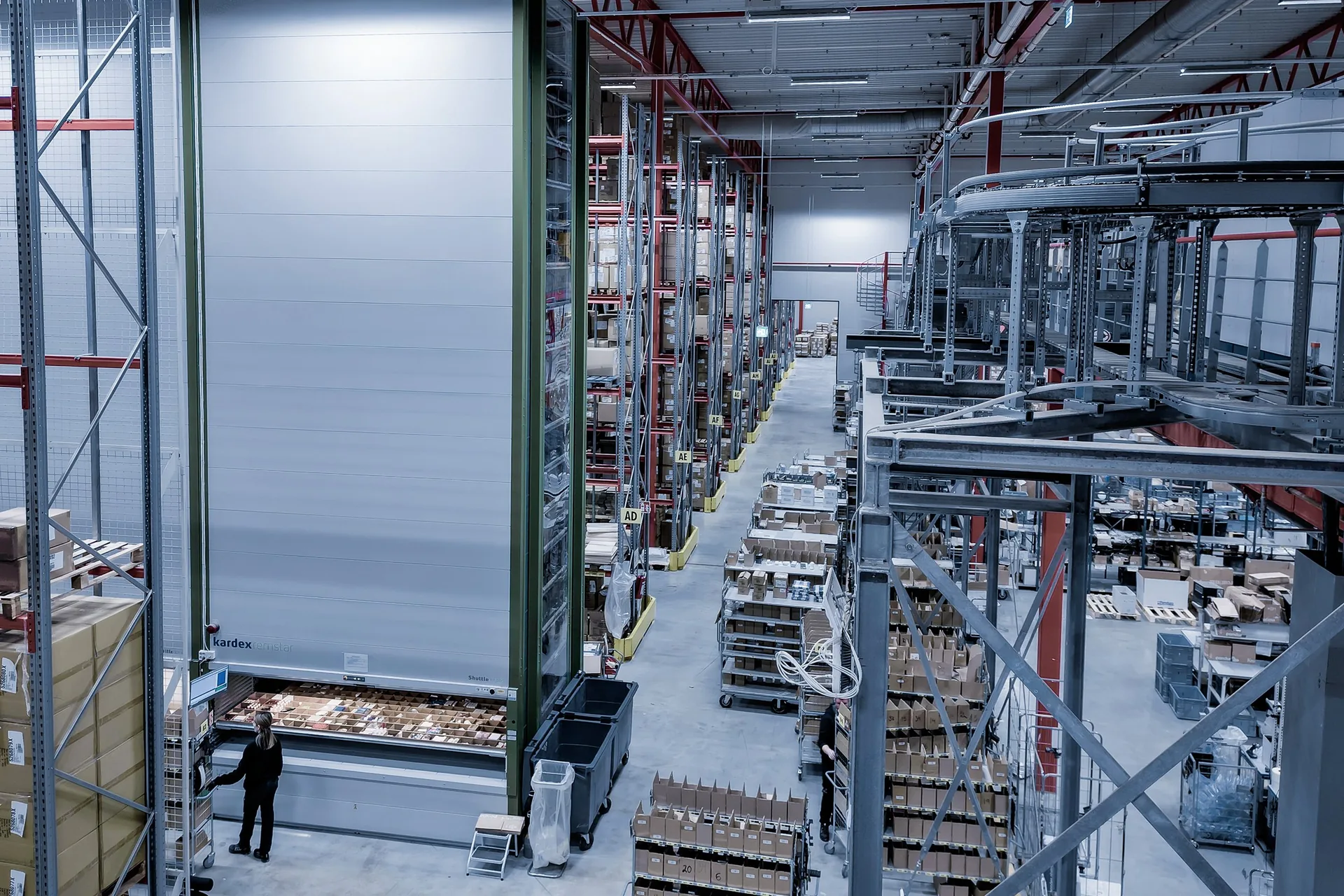
You do not start warehouse design and automation with the technology, but with your process and your data. First map out how your warehouse works now and where the bottlenecks are. Only then do you determine which layout or automation really adds value, and avoid an expensive mistake.
The biggest pitfall in warehouse automation is falling in love with technology. An impressive AGV or shuttle solves nothing if your underlying process is shaky. If you automate a messy process, you get a fast, expensive version of that same mess.
So start with the question: how does work flow through my warehouse today? Where do queues, duplicate handling or errors arise? Those bottlenecks determine where automation or a better layout really pays off.
Without figures you are steering on gut feeling. Map out your order profiles: how many order lines, which peaks, which products move fastest? Measure your lead times and your error rates.
This data is the basis for every good choice. It shows whether your problem lies in storage, in order picking or in dispatch, and therefore where you need to intervene.
This step often produces surprises already. A company that thought it had a storage problem turns out, once it measures, to be losing time mainly in order picking because of long walking routes. In that case a smarter layout makes more sense than extra racking. Measuring prevents you from investing in a solution to a problem you do not have.
You design a warehouse for the coming years, not for today. If you expect strong growth, scalability weighs heavily. If your volumes fluctuate sharply, flexibility is more important than maximum speed.
This is exactly where many projects go wrong: thinking too small and being stuck again in two years, or starting too big and paying for capacity you never use. The art is finding the right size.
Automation is not all or nothing. There is a whole spectrum, from smart layout and better WMS control to fully automated warehouses.
Low-threshold: a better layout, shorter walking routes and sharper WMS logic. Often surprisingly large gains for little investment.
Partial: mechanisation of the heaviest or most error-prone steps, such as transport or sorting.
Far-reaching: automated storage and picking solutions for large, stable volumes.
The right choice depends on your volumes, your growth and your payback period: not on what gave the best demo. Preferably start with the low-threshold gains; they often fund the next steps and keep the risk small.
Every serious investment deserves an honest business case. Set the investment against the savings on labour, space, errors and lead time. Also calculate with scenarios: what if your volume is disappointing, or in fact grows faster?
A good business case makes the discussion businesslike instead of emotional. It tells you not only whether you should automate, but also when and in which steps.
Do not forget the softer benefits in that calculation. Fewer physically demanding tasks make your warehouse more attractive as an employer, and more reliable deliveries strengthen your relationship with clients. Those effects are harder to capture in euros, but they weigh heavily in a tight labour market.
A design on paper is not yet a running warehouse. The real challenge lies in the realisation: managing suppliers, linking systems, bringing people along and getting it all live without the daily operation coming to a halt.
This is exactly where experience pays off. Anyone who has previously rebuilt or automated a warehouse knows the pitfalls and keeps the project on course. Advice and realisation, from drawing board to shop floor.
In addition, plan the transition in phases. A warehouse that switches over in one go is a big risk; a phased introduction lets you test, adjust and learn while business simply carries on. That way each step proves itself before you take the next one.
If you want to go deeper into the pitfalls of automation, also read How do you avoid thinking too small or starting too big with warehouse automation? and Future-proof warehouse strategies.
Do I need to have my process in order before I automate?
Yes. Automation strengthens a good process, but it also speeds up the errors in a bad process. Start with the process and the data.
How do I avoid starting too big or too small?
By basing your choice on measurable order profiles and a realistic growth forecast, with scenarios for volumes that exceed or fall short of expectations.
Is warehouse automation only for large companies?
No. A better layout and smarter WMS control also deliver gains, without a large investment. Far-reaching automation pays off mainly with large, stable volumes.
What is the payback period of warehouse automation?
That differs greatly per situation. A business case with savings on labour, space and errors makes the payback period concrete for your warehouse.
Do you want to make a smart start with warehouse design? View our approach to warehouse design and automation or schedule an introductory meeting.
Further reading: the full elaboration can be found in the five questions to answer before you invest in warehouse automation, including the HBM Machines case.
UC Group works everywhere: our professionals are based across the Benelux. We welcome visitors at our offices in Rotterdam and Nieuwkuijk. Drop by for a coffee and get to know us!