July 3, 2026
UC Group visits Arvato in Heijen, a warehouse of more than 200,000 square metres. How do they use AI and smart warehousing for customers in electronics, consumer goods, technology and pharma?
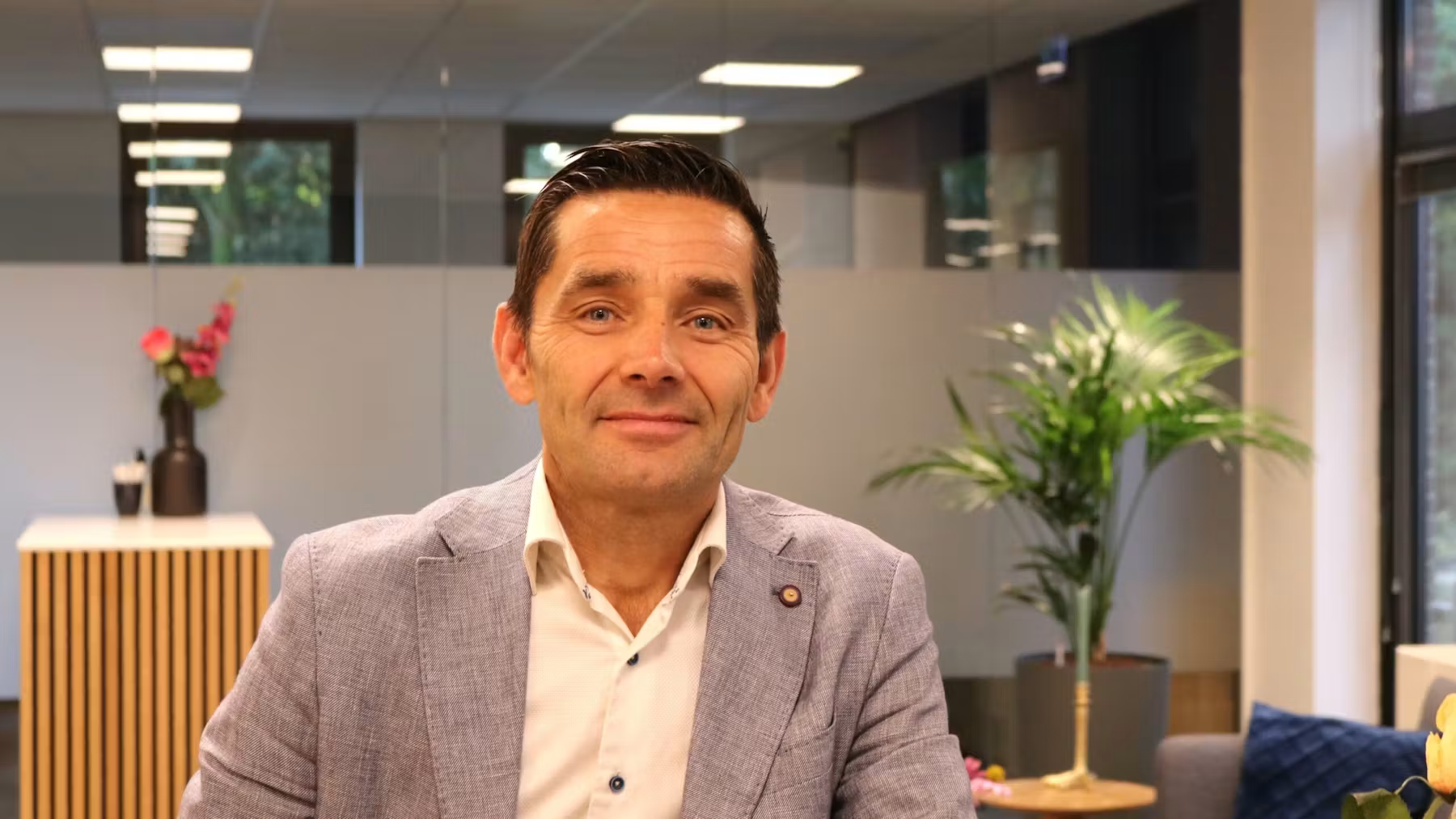
For the Logistics Leaders series, UC Group visits companies that are leading the way in the sector. This time it is Arvato, with a warehouse of more than 200,000 square metres in Heijen, in the Dutch province of Limburg. The site serves customers in electronics, consumer goods and the technical and pharmaceutical sectors, with systems as varied as an Autostore installation for wellness products and a Knapp shuttle system for a Japanese electronics manufacturer. Last year Arvato finished in 11th place in the Top 100 Logistiek Dienstverleners ranking: reason enough for Willem Mulderij, co-owner of UC Group and jury member for that same ranking, to talk to director Martijn Nielen about what AI is really delivering for the operation right now.
Nielen emphasises that smart warehousing at Arvato does not start with a robot or a conveyor belt, but with the interplay of automation, data and analysis. That approach is needed because customers expect more and more: higher speed, the ability to handle peak loads and a seamless omnichannel experience. A striking example is the Autostore installation: without a properly configured ABC analysis, the fast-moving items sit at the bottom of the system, so robots have to dig unnecessarily while employees stand waiting at the packing table. It is precisely on these kinds of planning issues (for both orders and staff) that Arvato finds AI offers demonstrable added value, partly because the systems learn from earlier patterns.
A next step Arvato is taking is working with digital twins: running through an implementation virtually first in order to predict bottlenecks and to actively receive suggestions for improvement. Mulderij draws the comparison with the construction sector, where changes to a design automatically carry through to the rest of the model. According to him, the logistics sector is not there yet: adjustments to a layout currently still often require a fair amount of manual calculation by an experienced engineer. He sees the way of working in construction as a logical next horizon for the sector.
Deploying major technology does not go well by itself, Nielen acknowledges. Arvato's first Autostore installation took almost two years to get right. That experience underlines why Arvato deliberately works with a limited number of large, global suppliers rather than ten different parties: in the tender phase, in which a watertight price has to be on the table within a few weeks, close collaboration with suppliers is crucial to prevent mistakes.
When it comes to AI tools, Arvato works with Microsoft Copilot in certain areas, in keeping with the broader collaboration between the two companies. In addition, Arvato has separated AI and robotics organisationally from regular IT and set up a separate test centre in Poland, where experiments are being carried out with humanoid robots, among other things. The company also recently took a stake in Unchained Robotics, in order to gain influence over new robotics more quickly and to be able to deploy it quickly too. The ambition is big: 10,000 robots by 2030.
For Mulderij, the ability to self-learn is the most important touchstone for calling something real AI: not every smart algorithm meets that standard. Nielen recognises this above all in the planning of orders and staff, an area that has been made extra complex in the Netherlands by the WAB legislation, under which employees have to be scheduled into time slots days in advance. Smarter, self-learning planning helps to save costs here directly by reducing downtime.
In five years' time Nielen does not expect a fully unmanned operation, but he does expect a more efficient and less physically demanding working environment. Heavy, repetitive work (such as unloading containers by hand) is an obvious candidate for further robotisation. At the same time, the role of employees is shifting: at Autostore, the in-house team now resolves 95 per cent of malfunctions itself. For Mulderij, that is also an opportunity to make the sector more attractive to new entrants, from practically trained staff to those with a higher professional education (hbo) degree: by embracing high-tech, the work becomes both more accessible and more interesting.
UC Group works everywhere: our professionals are based across the Benelux. We welcome visitors at our offices in Rotterdam and Nieuwkuijk. Drop by for a coffee and get to know us!