September 27, 2024

In logistics, Lean is a proven method for continuous improvement. Especially in times of staff shortages, rising costs, and disruptive supply chains, companies can use Lean to maintain their supply chain performance. However, there's a problem: the logistics sector is dominated by a culture of masculine leadership that is at odds with Lean principles. Therefore, ensure healthy diversity within management teams, say consultants Elsbeth Braaksma and Marleen Veth of UC Group. Stop the waste and pay more attention to the feminine leadership talent already present within your company.
Almost all companies with a logistics function are now doing something with Lean. Lean is a management philosophy aimed at achieving maximum customer value with as little waste as possible. By continuously improving, eliminating waste, and optimally coordinating links, overall supply chain performance is consistently elevated. The field of logistics has always shown great interest in Lean as a management philosophy, but current market conditions have only increased its necessity. There's a shortage of staff, energy and raw material prices are soaring, and supply chains are plagued by disruptions; management realizes that Lean is of great value in achieving promised customer value and maintaining profitability in such challenging circumstances.
What management often fails to fully grasp is that Lean cannot be compared to, for example, an IT system that you 'just implement'. It's a new way of collaborating that, especially in traditionally hierarchical companies, requires a significant cultural shift. The power of Lean lies in facilitating and inspiring everyone within an organization, from top to bottom, to improve work processes a little bit every day. It's crucial to explicitly involve people on the shop floor because they are closest to the process and best know where the waste occurs. This demands a special kind of leadership focused on connecting, facilitating, and coaching. You need to invite people to come up with ideas and create a safe environment for them where they dare to express their opinions and make mistakes. The attitude a leader adopts in this is crucial for success.
"You can often tell if current managers are suitable for functioning in a Lean environment just by their body language," says Elsbeth Braaksma of UC Group, who has led many Lean projects and coached managers throughout her career. "The traditionally-minded manager tends to lean forward, point their finger, and give instructions during a conversation. Within Lean, you see something entirely different: managers lean back, adopt a listening posture, and make inviting gestures."
According to her, these softer, more feminine management skills are decisive in Lean for creating the right culture. "Men can, of course, be very good at this too, but I observe that female managers naturally possess these qualities more. They are traditionally wired to keep a household running and have therefore developed organizational skills better. Men tend to be more driven to prove themselves and, in their genes, have a greater inclination towards status and possessions. They are less focused on the collective good. That's why it's such a shame that so few women work in logistics management positions."
For healthy decision-making within a company, it is essential to have good diversity in management teams. This leads to more innovation and better decisions.1). In logistics, this diversity is lacking because the sector is dominated by men. According to CBS, only 20% are women, and the percentage of female logistics managers is much lower, less than 10%. According to Marleen Veth of UC Group, this is, to speak in Lean terms, an enormous form of waste: that of (feminine) talent. It's also a waste that companies are primarily short-changing themselves with. "There's currently a significant shortage of people. Companies keep posting vacancies for logistics managers, to which almost no one responds, while often very talented women are working in operational roles within their companies. The problem is: they don't advance. There are all sorts of underlying causes for this that you need to try to eliminate, again, in a completely Lean way."
One of the reasons women don't advance into leadership positions is that the incumbent management very often doesn't encourage it at all. They are usually all men themselves, and so during a recruitment and selection process, they unconsciously assume that a new colleague will also be male. Job descriptions often ask for masculine personal characteristics, and if a female candidate does apply, they ask questions about part-time work or combining work with children that they would never ask a man. "But it's also down to women themselves," says Veth. "They are far too modest and very hesitant to apply for external or internal vacancies. Where a man will apply for positions even if he only possesses 50% of the required skills, a woman will only do so when she is certain she meets all requirements. Men are much more opportunistic in that regard and advocate more for themselves."
To prevent the waste of feminine leadership talent, UC Group has been regularly organizing Women in Supply Chain (WiSC) meetings since 2018. Here, participants can discuss their unique role within logistics and how they can leverage their female management skills to, for example, facilitate a Lean transition within their company. Braaksma: "The events primarily raise awareness. What I notice is that women in logistics don't even realize the masculine environment they are actually working in. They have fully adopted the traditional management style prevalent in their companies, while they could add so much extra with their feminine talents. This is not only much more pleasant for themselves but also for the company they work for. And for their male colleagues! Afterwards, I always hear that they too are very happy that the macho culture within their company is being broken down and that more balance has been achieved in management teams."
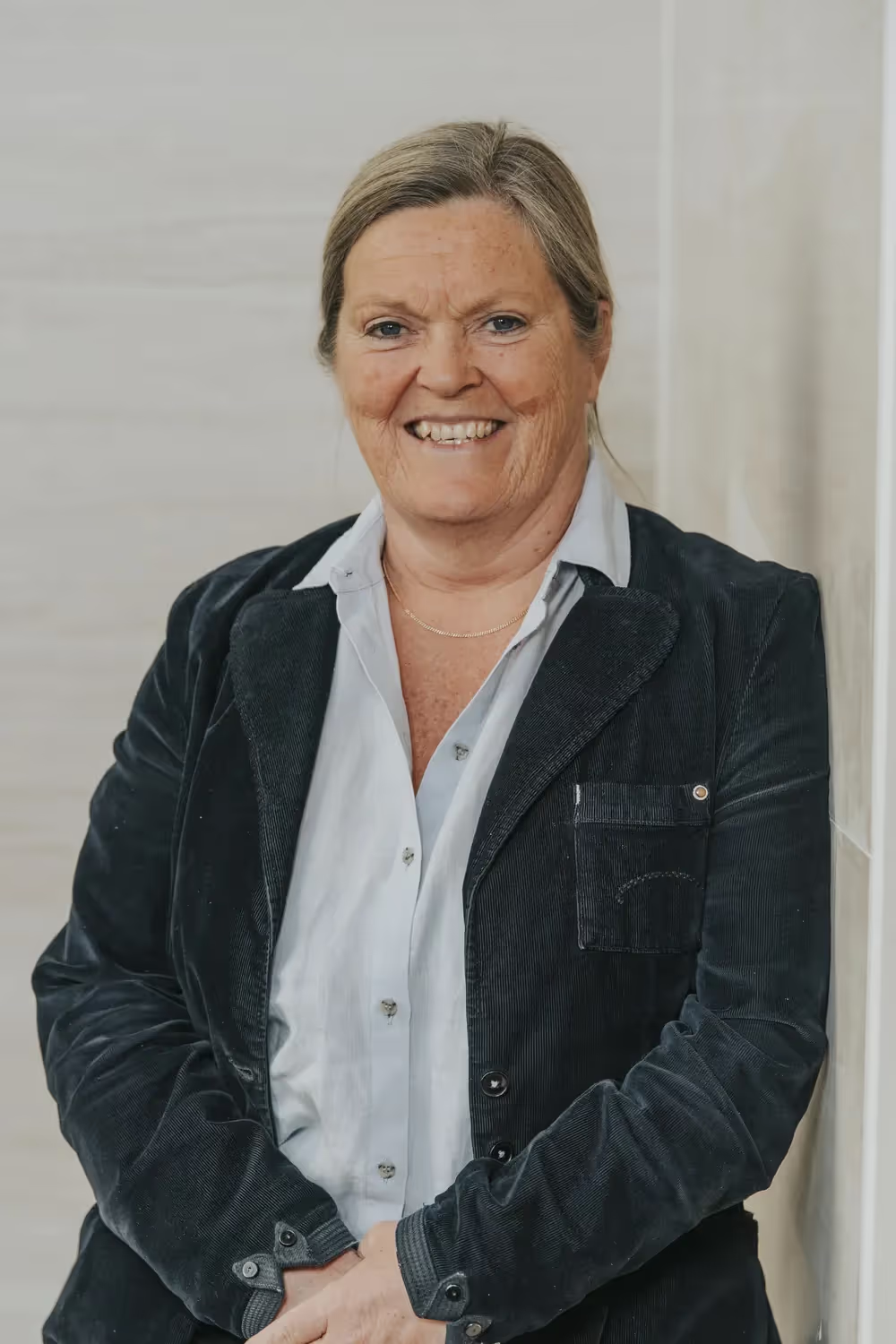
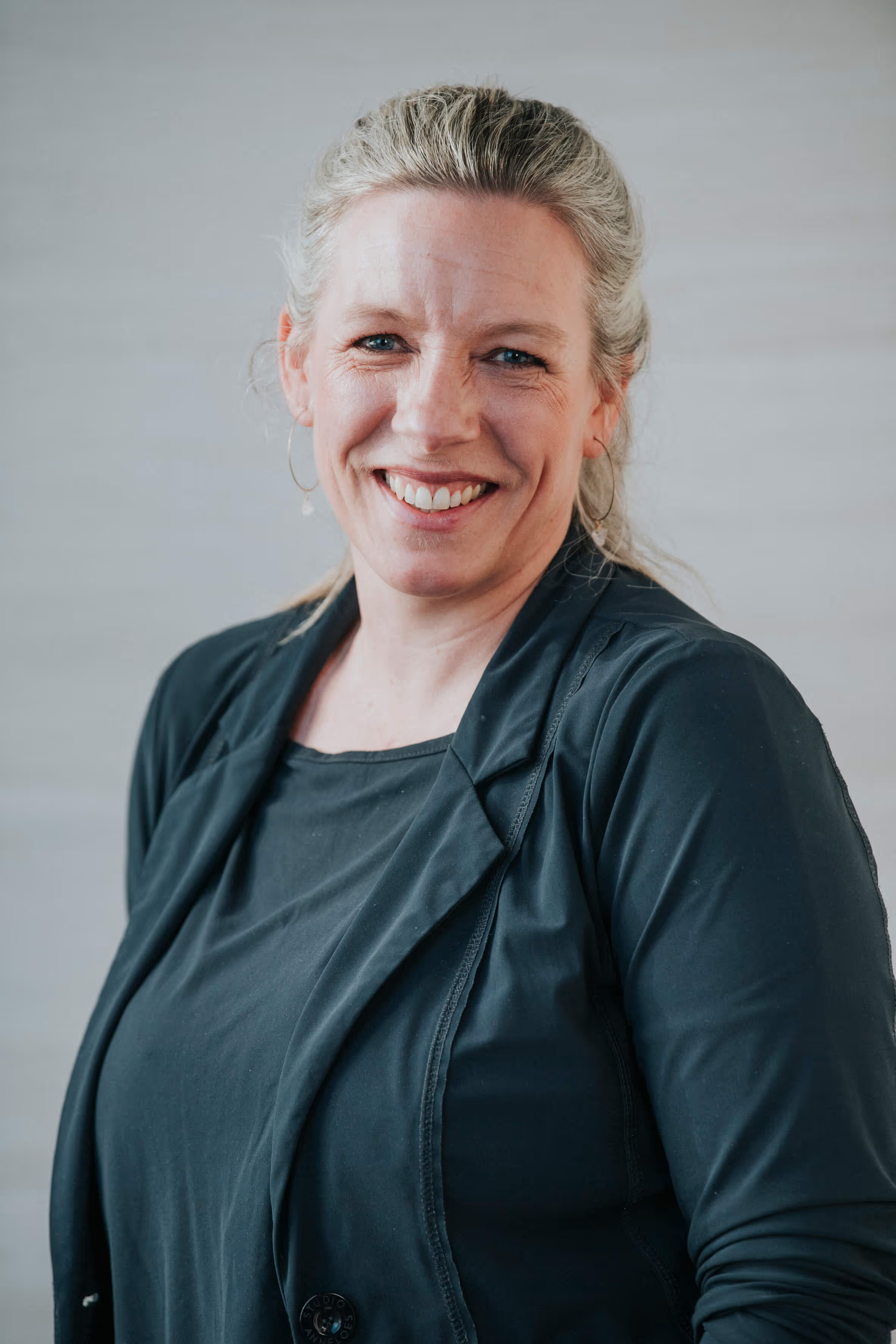
The article above was written based on input from two female professionals within UC Group: Elsbeth Braaksma and Marleen Veth. Elsbeth has been in the field for thirty years, fulfilling many management and project roles in transport and warehousing. In recent years, she has been frequently sought after to guide organizational change processes and crisis management. Marleen also has extensive experience in the sector, particularly in planning issues, supply chain management, and process optimization. She also leads many projects in change management.
UC Group works everywhere: our professionals are based across the Benelux. We welcome visitors at our offices in Rotterdam and Nieuwkuijk. Drop by for a coffee and get to know us!